
Lenten Devotional 2026
This Lenten devotional invites readers to walk slowly and honestly through the season of Lent, guided by Scripture and the hymns of the Christian faith. Beginning with Ash Wednesday and moving toward Easter morning, each day offers reflection, prayer, and sacred song that draw the heart toward repentance, trust, and hope. Through familiar hymns and biblical passages, this devotional creates space to pause, listen, and return to God—remembering that Lent is not a journey of condemnation, but one of grace, renewal, and resurrection.

Friday, March 6 Be Still, My Soul
Scripture:
“Be still, and know that I am God.” — Psalm 46:10
Hymn Focus: Be Still, My Soul
“Be still, my soul: the Lord is on thy side;
Bear patiently the cross of grief or pain.”
Lent is a season that invites stillness—not as escape, but as trust. As we slow our pace and quiet our hearts, the hymn Be Still, My Soul offers a gentle command and a deep promise. Stillness is not passivity; it is an act of faith rooted in the conviction that God is present and faithful, even when life feels unsettled.
The hymn speaks honestly about grief, pain, and loss. Lent does the same. As we journey toward the cross, we are reminded that suffering is not foreign to the life of faith. Yet the hymn does not leave us alone with our sorrow. It anchors us in hope: “The Lord is on thy side.” In the face of uncertainty, this assurance becomes a lifeline.
To “bear patiently the cross” is not to deny our pain, but to entrust it to God. Stillness allows us to release our need to control outcomes and instead rest in God’s wisdom. Lent teaches us that God is often at work beneath the surface, shaping redemption out of what we cannot yet understand.
Later verses of the hymn look beyond the present moment: “When change and tears are past, all safe and blessed we shall meet at last.” This Lenten promise does not minimize present sorrow, but places it within the larger hope of God’s restoring future. Stillness becomes the space where trust grows—where we learn to wait, to hope, and to believe.
Prayer
Steadfast God,
In the quiet of this Lenten season,
teach our souls to be still before you.
When we carry grief or uncertainty,
remind us that you are on our side.
Help us to bear the cross with patience,
to trust your guiding hand,
and to rest in the hope that your love
will lead us safely through.
Amen.
Thursday, March 5—Take Up Thy Cross
Scripture:
“If any want to become my followers, let them deny themselves and take up their cross and follow me.” — Mark 8:34
Hymn Focus:
“Take Up Thy Cross, and follow Me.”
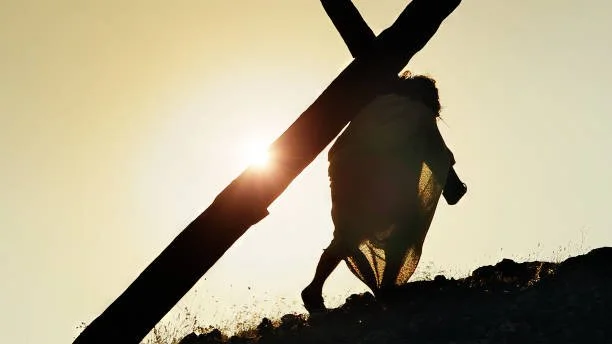
The call of Lent is clear and uncompromising: Take up thy cross and follow Christ. This hymn does not romanticize discipleship. Instead, it names the cost of following Jesus—self-denial, perseverance, and faithfulness when the road is hard.
In a culture that prizes comfort and self-fulfillment, the cross feels out of place. We often imagine it as a symbol we admire rather than a path we walk. Yet Jesus speaks of the cross not as an ornament, but as a daily commitment. To take up the cross is to choose obedience over ease, love over self-interest, and faith over fear.
Lent invites us to examine what we resist surrendering. What habits, attitudes, or attachments keep us from fully following Christ? The hymn reminds us that the cross is not only about loss; it is also about purpose. The way of the cross is the way of life because it leads us closer to Jesus himself.
The final promise of the hymn is quiet but strong: those who follow Christ in the way of the cross will share in his victory. Lent does not end at suffering, but at resurrection. When we take up the cross, we do not walk alone—Christ goes before us, bearing the weight we could never carry on our own.
Prayer
Faithful God,
You call us not to an easy path,
but to a faithful one.
In this Lenten season, give us courage
to take up the cross you place before us.
Help us to deny ourselves with trust,
to follow Jesus with hope,
and to believe that the way of the cross
leads always toward life.
Amen.

Wednesday, March 4 Calvary Covers It All
Scripture:
“He himself bore our sins in his body on the cross, so that, free from sins, we might live for righteousness.” — 1 Peter 2:24
Hymn Focus:
“No one but Jesus
Can make us pure as snow
We stand in Your freedom
Calvary covers it all”
Lent gently but firmly invites us to face the truth about ourselves. We slow down, strip away distractions, and notice the places where our love has grown thin and our faith weary. In that honest light, the hymn Calvary Covers It All speaks a word of deep reassurance: nothing we uncover in Lent is beyond the reach of Christ’s mercy.
At Calvary, Jesus does not offer partial forgiveness or conditional grace. The cross stands as God’s complete answer to human sin and suffering. Our past regrets, present failures, and future fears are all gathered into the saving work of Christ. What feels too heavy for us to carry is not too heavy for the cross.
During Lent, we may be tempted to measure ourselves—how well we fast, pray, or repent. But this hymn redirects our gaze. Our hope does not rest in the strength of our devotion, but in the sufficiency of Christ’s sacrifice. Calvary reminds us that grace precedes our effort and outlasts our weakness.
To say “Calvary covers it all” is not to excuse sin, but to trust that forgiveness is deeper than our brokenness. The cross frees us to repent honestly, love boldly, and walk humbly, knowing that we are held by a mercy we did not earn and cannot exhaust.
Prayer
Gracious and loving God,
As we journey through Lent,
help us to lay down what we cannot fix or control.
When we are tempted to carry guilt or shame,
draw our eyes again to the cross.
Thank you that at Calvary,
your love covers all our sin and sorrow.
Shape our hearts by this grace,
that we may follow Jesus with gratitude and trust.
Amen.

Tuesday, March 3 On Christ, the Solid Rock, I Stand
Scripture:
“Everyone then who hears these words of mine and acts on them will be like a wise man who built his house on rock.” Matthew 7:24–25
Hymn Focus:
“On Christ, the solid Rock, I stand;
All other ground is sinking sand.”
Lent is a season that gently but firmly asks us to examine the foundations of our lives. The hymn “On Christ, the Solid Rock, I Stand” speaks to that searching question: What are we really standing on? When distractions fall away and illusions are stripped back, Lent reveals whether our trust rests in Christ or in ground that cannot hold us.
The image of sinking sand is especially powerful during Lent. So much of what we rely on—success, certainty, comfort, control—can shift or collapse under pressure. Lent is not meant to frighten us, but to free us, inviting us to place our weight fully on Christ, whose faithfulness does not change.
The hymn reminds us that Christ’s love was proven at the cross:
“When darkness veils His lovely face,
I rest on His unchanging grace.”
Lent acknowledges that faith is sometimes lived in shadow. There are moments when God feels distant, prayers seem unanswered, or the way forward is unclear. In those moments, faith means choosing to trust Christ’s grace even when our feelings waver.
The hymn also points us toward hope beyond the cross:
“When He shall come with trumpet sound,
Oh, may I then in Him be found.”
Lent does not end in uncertainty. It moves toward resurrection and renewal. Standing on Christ means trusting not only His sacrifice, but also His promise of new life and ultimate redemption.
As you journey through Lent, allow this hymn to become a confession of faith. Let it guide your repentance and your trust. When other ground begins to shift, return to Christ—the solid Rock who holds you now and forever.
Prayer
Faithful God,
In this Lenten season, help us to examine our foundations.
Where we have trusted in what cannot last, draw us back to Christ, our solid Rock.
Strengthen our faith when the ground feels uncertain, and lead us through the cross
into the hope of resurrection life.
Amen.

Monday, March 2 Dear Lord and Father of Mankind
Scripture:
“He rebuked the wind, and said to the sea, ‘Peace! Be still!’” Mark 4:39
Hymn Focus:
“Dear Lord and Father of mankind,
Forgive our foolish ways…”
Lent invites us to slow our pace and quiet our hearts. The hymn “Dear Lord and Father of Mankind” is a prayer for stillness in a noisy world, asking God to forgive our restless striving and draw us back into trustful obedience.
The opening line acknowledges a truth Lent helps us face: we often rush through life, relying on our own strength, driven by anxiety or pride. In asking God to forgive our “foolish ways,” we are not shaming ourselves, but confessing our need for grace. Lent creates space for this honesty, offering forgiveness rather than judgment.
The hymn’s call to “reclothe us in our rightful mind” speaks to renewal. Lent is not merely about giving things up; it is about being reshaped from the inside out. God’s grace restores clarity where confusion reigns and peace where fear has taken hold.
Perhaps the most beloved line of the hymn is its plea:
“In simple trust like theirs who heard,
Beside the Syrian sea…”
Here, we are reminded of the disciples, who learned faith not through noise or spectacle, but through quiet listening and daily obedience. Lent draws us back to that simplicity—learning again to listen for Christ’s voice amid the chaos.
The hymn closes with a longing for calm:
“O still, small voice of calm.”
Lent teaches us that God often speaks not through force, but through gentleness. In silence, prayer, and reflection, we discover that God’s peace is already present, waiting to be received.
As you journey through Lent, let this hymn guide you into stillness. Set aside what distracts and overwhelms. Listen for God’s voice—not in urgency or fear, but in quiet assurance. In that stillness, you will find forgiveness, renewal, and peace.
Prayer
Dear Lord and Father of mankind,
Forgive our restless ways and quiet our hearts.
During this Lenten season,
teach us to listen for Your still, small voice.
Renew our minds, deepen our trust,
and lead us in the path of peace,
through Jesus Christ our Lord.
Amen.

Second Sunday in Lent, March 1 My Faith Looks Up to Thee
Scripture:
“We love because he first loved us.”I John 4:19
Hymn Focus:
“My faith looks up to Thee,
Thou Lamb of Calvary…”
Lent is a season that teaches us where to look. When the weight of sin, sorrow, or uncertainty presses in, our natural instinct is often to look inward or backward—to our failures, our fears, or our regrets. The hymn “My Faith Looks Up to Thee” gently redirects our gaze upward, toward Christ, the Lamb who bears our sin.
To look up in faith is not to deny the reality of our struggle. Lent invites honest reflection and repentance. Yet this hymn reminds us that even our repentance is grounded in hope. We lift our eyes not to ourselves, but to the One whose sacrifice makes forgiveness possible.
The image of Christ as the “Lamb of Calvary” draws us to the heart of Lent. Jesus willingly offers Himself, carrying our sin and sorrow. As we reflect on the cross, we are reminded that grace meets us before we are fully ready, before we have all the answers, before we feel worthy.
The hymn also becomes a prayer for guidance and strength:
“While life’s dark maze I tread,
And griefs around me spread…”
Lent acknowledges that the path of faith is not always clear or easy. There are seasons of confusion, grief, and fatigue. In those moments, faith is not certainty—it is trust. It is choosing, again and again, to keep looking to Christ when the way feels dark.
The hymn ends with a plea for enduring hope:
“O bear me safe above,
A ransomed soul.”
Lent points us beyond the cross to the promise of resurrection. The journey may pass through shadow, but it does not end there. Christ’s love carries us through death into new life.
As you journey through Lent, let this hymn shape your prayer. When you are tempted to look away, look up. Fix your faith on Christ, trusting that His grace is sufficient for every step of the way.
Prayer
Lamb of God,
In this Lenten season, we lift our eyes to You.
Forgive our sins, strengthen our faith,
and guide us through the dark places of life.
When our steps falter, hold us fast.
Keep our hearts fixed on You,
until we reach the joy of new life in Christ.
Amen.

Saturday, February 28 Beneath the Cross of Jesus
Scripture:
“Meanwhile, standing near the cross of Jesus were his mother… and Mary Magdalene.” John 19:25
Hymn Focus: “Beneath the cross of Jesus
I fain would take my stand…”
Lent invites us to slow down and take our place beneath the cross—to stand, to kneel, to linger where love was fully revealed. The hymn “Beneath the Cross of Jesus,” written by Elizabeth Cecilia Clephane, gives us words for this holy posture. It is not a hymn of hurried faith, but of quiet, faithful presence.
To stand beneath the cross is to stop striving and simply behold. The hymn speaks of the cross as “a mighty rock within a weary land,” a place of refuge rather than terror. Here, the cross is not only the symbol of suffering, but the shelter where our weary souls can rest. In a season that calls us to repentance and self-examination, we are reminded that we do not face our sin alone—we face it in the shadow of grace.
The hymn also draws our eyes upward and outward, linking the cross to the love of Christ:
“And from my smitten heart, with tears,
Two wonders I confess—
The wonders of redeeming love
And my unworthiness.”
Lent holds these two truths together. We acknowledge our brokenness honestly, without excuse or denial. At the same time, we marvel at a love that meets us there—not with condemnation, but with mercy. Beneath the cross, shame gives way to gratitude, and confession opens the door to healing.
As we continue our Lenten journey, this hymn teaches us to remain close to the cross—not rushing past it to Easter morning, but letting its meaning sink deep into our hearts. Beneath the cross, our priorities are reordered. Earthly ambitions fade, and eternal love comes into focus.
Today, take a moment to imagine yourself standing beneath the cross of Jesus. Listen. Wait. Rest. Let the cross become your shelter, your strength, and your song.
Prayer
Gracious Savior,
Beneath Your cross we take our stand.
Meet us in our weariness, forgive us in our sin,
and teach us to trust the love poured out for us.
As we walk through this Lenten season,
keep our eyes fixed on You,
until the cross gives way to resurrection hope.
Amen.

Friday, February 27 My Jesus, I Love Thee
Scripture:
“Simon son of John, do you love me?” … “Lord, you know that I love you.” John 21:15–17
Hymn Focus:
“My Jesus, I love Thee, I know Thou art mine;
For Thee all the follies of sin I resign.”
Lent invites us into a deeper love—one that is honest, costly, and faithful. The hymn “My Jesus, I Love Thee” is a simple confession of devotion, not rooted in emotion alone, but in commitment. During Lent, these words become both prayer and promise.
To say “I love Thee” in this season is to examine what that love truly costs. Lent asks us to release “the follies of sin,” not out of fear or obligation, but out of love for Christ. Repentance becomes an act of affection—choosing Christ again and again over the habits and attachments that pull us away from Him.
The hymn draws our attention to the cross:
“I love Thee because Thou hast first loved me,
And purchased my pardon on Calvary’s tree.”
Here, love is rooted not in our effort, but in Christ’s sacrifice. Lent reminds us that our devotion is always a response to grace already given. We love because He first loved us.
As the hymn moves toward suffering and faithfulness—
“In mansions of glory and endless delight,
I’ll ever adore Thee in heaven so bright”—
we are reminded that love does not end at the cross. Lent holds together both sacrifice and hope. Loving Jesus means walking with Him through suffering while trusting in the promise of resurrection and eternal life.
This hymn also challenges us to consistency: to love Jesus not only in moments of worship, but in daily choices, quiet obedience, and patient endurance. Lent becomes a time to ask ourselves: How is my love for Christ shaping my life?
As you journey through Lent, let this hymn be your prayer. Speak its words slowly. Let love—not fear—guide your repentance. Let gratitude shape your devotion. And let Christ’s love draw you ever closer to Him.
Prayer
My Jesus, we love You, not because we are faithful, but because You are.
During this Lenten season, help us to surrender what draws us away from You
and to follow You with sincere hearts. Root our love in Your grace, and lead us through the cross
into the joy of new life. Amen.

Thursday, February 26 Jesus Is a Rock in a Weary Land
Scripture:
“Each will be like a hiding place from the wind, a shelter from the storm, like streams of water in a dry place, like the shade of a great rock in a weary land.” Isaiah 32:2
Hymn Focus:
“Jesus is a rock in a weary land,
A weary land, a weary land…”
Lent is often described as a journey through wilderness and weariness. It is a season that asks us to face hard truths about ourselves and the world we inhabit. The spiritual “Jesus Is a Rock in a Weary Land” gives voice to the deep longing for shelter and strength when the road feels long and the land feels dry.
To call Jesus a rock is to speak of stability in a shifting world. A rock does not hurry us through our suffering, nor does it pretend the weariness is not real. Instead, it offers something solid to lean on. Lent invites us to stop striving for quick relief and to rest instead in the presence of Christ, who meets us in our fatigue and carries us through it.
The image of a “weary land” resonates deeply during Lent. We are tired—tired of conflict, loss, injustice, and our own repeated failures. Lent allows us to name that weariness honestly, without shame. The spiritual reminds us that God does not ask us to be strong on our own; God offers Christ as our refuge.
Scripture echoes this promise: “Come to me, all you who are weary and burdened, and I will give you rest.” Jesus does not remove us from the land we must walk through, but He becomes the shelter within it. In His life, suffering, and death, Jesus enters our weariness fully—and in doing so, redeems it.
As we move closer to the cross, we see that Jesus is not only a rock of protection, but also a rock of sacrifice. The One who gives us rest is the One who bears the weight of the world’s sin. Lent calls us to trust that even in the hardest terrain, God’s faithfulness remains unshaken.
This Lenten season, when the land feels weary and your strength feels thin, pause and lean into Christ. Let Him be your shelter, your foundation, and your hope.
Prayer
Faithful God,
In this weary land, we lean on You.
When our strength is gone and our hearts are heavy,
remind us that Jesus is our rock.
Hold us steady through the wilderness of Lent,
and lead us toward the promise of new life,
through Jesus Christ our Lord.
Amen.

Wednesday, February 25 In the Cross of Christ, I Glory
Scripture:
“Looking to Jesus… who endured the cross, disregarding its shame.” Hebrews 12:2
Hymn Focus:
“In the cross of Christ I glory,
Towering o’er the wrecks of time…”
Lent draws our eyes again to the cross—not as a symbol of defeat, but as the place where God’s saving love stands firm amid the brokenness of the world. The hymn “In the Cross of Christ I Glory” invites us to claim the cross not with shame, but with confident hope.
The image of the cross “towering o’er the wrecks of time” reminds us that history is marked by loss, failure, and human frailty. Yet the cross rises above it all, steady and unshaken. Lent asks us to be honest about the wreckage in our own lives—our sins, regrets, and wounds—while trusting that the cross still stands as a sign of redemption.
The hymn declares that from the cross “streams of grace” flow freely. Lent is not about earning forgiveness through effort or discipline; it is about opening ourselves to grace already given. As we repent and turn toward God, we discover that mercy meets us before we even ask.
Another verse proclaims:
“When the woes of life o’ertake me,
Hopes deceive and fears annoy…”
Lent speaks directly to these experiences. In seasons of uncertainty and pain, the cross becomes our refuge. It assures us that God is present even in suffering, and that love has already entered the darkest places.
To glory in the cross is not to celebrate pain, but to trust the love that endured it. During Lent, we learn again that the cross reshapes how we see the world—what we value, what we pursue, and where we place our hope.
As you journey through Lent, return often to the cross. Let it stand before you in times of repentance and in moments of fear. In its shadow, we find forgiveness, strength, and the promise of new life.
Prayer
Saving God,
We glory in the cross of Christ,
where love overcame sin and hope rose from suffering.
During this Lenten season,
help us to lay down our pride and trust in Your grace.
When fears arise or burdens weigh heavy,
draw us back to the cross,
until our lives reflect the love revealed there.
Through Jesus Christ our Lord.
Amen.

Tuesday, February 24 And Can It Be That I Should Gain
Scripture:
“But God proves his love for us in that while we still were sinners Christ died for us.” — Romans 5:8
Hymn Focus:
“And can it be that I should gain
An interest in the Savior’s blood?
Died He for me, who caused His pain—
For me, who Him to death pursued?”
Charles Wesley’s words lead us into holy wonder. Lent invites us to slow down and stand beneath the cross, not as distant observers, but as those for whom Christ died. The hymn does not rush past the cost of grace. It lingers in awe: Died He for me?
During this season, we remember that Jesus’ journey to the cross was not abstract or symbolic. It was deeply personal. He bore wounds meant for us. He carried the weight of sin we could never lift. Lent calls us to face the truth about ourselves—our brokenness, our wandering, our need—and at the same time to behold the astonishing mercy of God.
The hymn later declares, “Amazing love! How can it be, that Thou, my God, shouldst die for me?” This is the heart of Lent: not guilt alone, but gratitude born of grace. As we repent, we also marvel. As we confess, we also rejoice. The cross reveals both the seriousness of sin and the immeasurable depth of God’s love.
Let this season be one of holy wonder. Return often to the question the hymn asks, not to doubt, but to worship: How can it be? And let the answer draw you closer to the Savior who gave everything for you.
Prayer
Gracious God,
We stand in awe before the mystery of Your love.
That Christ would suffer and die for us—
for us in our weakness, our wandering, our sin—
is more than we can comprehend.
During this Lenten journey, slow our hearts.
Help us to see the cross clearly
and to remember the cost of our redemption.
Lead us into true repentance,
not born of fear, but shaped by gratitude.
Let the wonder of Your grace renew our faith.
May “amazing love” become the song of our lives,
drawing us ever closer to Jesus,
who gave Himself for us.
Amen.

Monday, February 23 This Lonesome Valley
Scripture:
“If any want to become my followers, let them deny themselves and take up their cross daily and follow me.” Luke 9:23
Hymn Focus:
“You gotta walk that lonesome valley,
You gotta walk it by yourself…”
Lent is a season that invites us into the quiet places—the valleys where distractions fall away and we come face to face with ourselves before God. The spiritual “This Lonesome Valley” reminds us of a truth we often resist: some parts of the journey of faith must be walked alone.
This does not mean we are abandoned. Rather, it means that faith is not something we can borrow or delegate. No one else can repent for us. No one else can surrender our pride, confess our sin, or choose obedience on our behalf. Lent calls us to personal honesty, to take responsibility for our walk with God.
The hymn’s simplicity echoes Jesus’ words: “If any want to become my followers, let them deny themselves and take up their cross and follow me.” The valley represents those moments when the way is narrow and the choice is costly—when faith requires courage, humility, and trust rather than comfort or applause.
Yet the hymn does not end in despair. It also declares:
“Jesus walked that lonesome valley;
He had to walk it by himself.”
Before we ever stepped into our own valleys, Christ entered one for us. He faced temptation, rejection, suffering, and death—not because He had to, but because He chose to walk the path of obedience for our sake.
In Lent, we remember that Jesus understands the loneliness of our struggle. He does not stand at a distance; He walks with us, even when the road feels solitary. The valley becomes a place of deep encounter, where faith is refined and trust is strengthened.
As you journey through this Lenten season, do not rush through the valley. Walk it prayerfully. Listen carefully. Trust that God is at work in the quiet. And remember: though some steps must be taken alone, you are never beyond the reach of Christ’s presence.
Prayer
Faithful God,
When the path feels lonely and the valley feels deep,
help us to walk with courage and honesty.
Remind us that Jesus has gone before us
and walks with us still.
As we travel through Lent,
strengthen our faith, deepen our trust,
and lead us toward the hope of resurrection.
Amen.

First Sunday in Lenten, February 22 Jesus Keep Me Near the Cross
Scripture:
“I have been crucified with Christ; and it is no longer I who live, but it is Christ who lives in me.” Galatians 2:19–20
Hymn Focus:
“Jesus, keep me near the cross;
There a precious fountain…”
Lent is a season of returning—returning to God, returning to truth, returning to the place where grace first met us. The hymn “Jesus, Keep Me Near the Cross” is a quiet prayer of the heart, asking not for escape from hardship, but for nearness to Christ in every circumstance.
To ask to be kept near the cross is to acknowledge how easily we drift. We become distracted by comfort, overwhelmed by worry, or weighed down by guilt. Lent gently draws us back, reminding us that the cross is not only the place of Christ’s suffering, but the source of our healing and hope. The “precious fountain” flowing from the cross speaks of forgiveness that never runs dry.
The hymn names the cross as both refuge and strength:
“Near the cross, a trembling soul,
Love and mercy found me.”
Here, our fear is met with compassion. Our trembling is not dismissed, but welcomed. Lent invites us to bring our weakness honestly before God, trusting that love and mercy still meet us there.
As the hymn continues, it looks beyond the present moment to God’s sustaining grace:
“Near the cross I’ll watch and wait,
Hoping, trusting ever.”
Lent teaches us to wait—to sit with unanswered questions, to hold faith even when the path is unclear. Staying near the cross anchors us in hope, reminding us that God’s promises are sure, even when fulfillment seems distant.
This hymn also points us forward:
“Till I reach the golden strand,
Just beyond the river.”
The cross stands not only at the center of our repentance, but at the doorway to eternal life. The hope of resurrection gives meaning to our waiting and courage to our faith.
During this Lenten season, let this hymn become your prayer. Ask Jesus to keep you near the cross—near mercy when you fail, near love when you are afraid, and near hope when you are weary.
Prayer
Jesus, keep us near the cross.
When we are tempted to wander, draw us back.
When we are burdened by sin or sorrow,
remind us that love and mercy still flow.
As we journey through Lent,
help us to watch and wait with hope,
trusting Your grace now and forever.
Amen.

Saturday, February 21 The Old Rugged Cross
Scripture:
“May I never boast of anything except the cross of our Lord Jesus Christ, by which the world has been crucified to me, and I to the world.” Galatians 6:14
Hymn Focus:
“On a hill far away stood an old rugged cross,
the emblem of suffering and shame…”
Lent invites us to look steadily at the cross—not as an ornament or distant symbol, but as the place where love bore the weight of suffering. The hymn “The Old Rugged Cross” calls us to see the cross in all its roughness and reality. It was not polished or beautiful by the world’s standards. It was an instrument of shame, pain, and death.
And yet, this hymn reminds us of a profound truth: what the world rejected, God redeemed. The cross that represented disgrace became the sign of our salvation. Lent is a season that asks us to face uncomfortable truths—about sin, sacrifice, and the cost of grace—but always in the light of God’s transforming love.
The hymn declares,
“So I’ll cherish the old rugged cross,
till my trophies at last I lay down.”
To cherish the cross does not mean to glorify suffering, but to honor the love that endured it. Lent invites us to examine what we cling to—our pride, our achievements, our need for control—and to lay them down at the foot of the cross.
As we journey through Lent, the cross becomes both a mirror and a guide. It shows us the seriousness of sin and the depth of Christ’s obedience. It also leads us toward a life shaped by humility, faithfulness, and self-giving love. Following Jesus means carrying our own crosses—not as punishment, but as a path of trust and devotion.
The hymn ends with hope beyond the present moment:
“I will cling to the old rugged cross,
and exchange it someday for a crown.”
Lent does not end at the cross; it moves through it toward resurrection. The promise of new life gives meaning to the sacrifice we remember now.
This Lenten season, linger at the cross. Let it reshape your values, soften your heart, and deepen your gratitude. In the shadow of the old rugged cross, we discover both the cost of love and the hope of glory.
Prayer
Faithful Savior,
We stand before the old rugged cross,
aware of its pain and grateful for its promise.
Teach us to lay down all that keeps us from You,
and to walk the path of humble devotion.
As we journey through Lent,
keep our eyes fixed on the love that saves us,
until we are made new in the light of Your resurrection.
Amen.

Friday, February 20 At the Cross
Scripture:
“But God proves his love for us in that while we still were sinners Christ died for us.” Romans 5:8
Hymn Focus: “At the cross, at the cross where I first saw the light,
and the burden of my heart rolled away…”
Lent draws us again to the foot of the cross, the place where truth and grace meet. The hymn “At the Cross” gives voice to the deep wonder of this moment—wonder that God’s own Son would suffer, and that His suffering would bring us life.
Isaac Watts’ words begin with honest astonishment:
“Alas! and did my Savior bleed, and did my Sovereign die?”
This is not casual reflection. It is the startled realization that the cross was not an accident or a tragedy alone—it was love willingly poured out. Lent invites us to sit with that question, to let it pierce our hearts before rushing to answers.
The hymn leads us to confession as well:
“Would He devote that sacred head for such a worm as I?”
These words echo the Lenten call to humility. We acknowledge our sin, our brokenness, and our need for grace. Yet the hymn does not leave us in despair. Instead, it moves us toward release and gratitude:
“At the cross… the burden of my heart rolled away.”
Lent is not about carrying heavier guilt, but about laying it down. At the cross, the weight we have carried—regret, shame, fear—is lifted by Christ’s sacrifice. Faith does not deny the seriousness of sin; it trusts the sufficiency of grace.
The hymn ends with a response:
“Now I am happy all the day.”
This joy is not shallow happiness, but deep assurance. Even in the solemnity of Lent, there is quiet joy in knowing we are forgiven, redeemed, and held by love stronger than death.
As you journey through Lent, return often to the cross—not just as a symbol of suffering, but as the place where light first broke into your darkness. Stay there long enough to see clearly, to confess honestly, and to rise renewed.
Prayer
Lord Jesus,
At the cross we see both the cost of our sin and the depth of Your love.
Help us to bring our burdens to You and leave them there.
As we walk through this Lenten season,
shape our hearts with gratitude, humility, and faith,
until the light of resurrection dawns anew.
Amen.

Thursday, February 19 Lord, Who Throughout These Forty Days
Scripture: “Then Jesus was led up by the Spirit into the wilderness to be tempted by the devil. He fasted forty days and forty nights, and afterwards he was famished.” Matthew 4:1–2
Hymn Focus:
“Lord, who throughout these forty days
For us didst fast and pray…”
Lent begins by turning our eyes to Jesus in the wilderness. The hymn “Lord, Who Throughout These Forty Days” reminds us that before Jesus preached, healed, or went to the cross, He entered a season of fasting, prayer, and temptation. Lent mirrors that journey, inviting us to walk with Him through the wilderness of self-examination and trust.
The hymn acknowledges that Jesus knows our human weakness. He faced hunger, temptation, and isolation—not as a distant observer, but as One who fully entered our condition. Lent assures us that our struggles are not signs of failure, but places where Christ meets us with understanding and strength.
As the hymn prays,
“Teach us with Thee to mourn our sins,
And close by Thee to stay,”
we hear the heart of Lent. Repentance is not meant to drive us into shame or despair. It draws us closer to Christ. To “stay close” to Jesus is the goal—not perfection, but presence.
The hymn also calls us to spiritual discipline:
“And through these days of penitence,
And through Thy Passiontide…”
Lenten practices such as fasting, prayer, and generosity are not ends in themselves. They shape our hearts to depend more fully on God, loosening our grip on what distracts us from faithful living.
Finally, the hymn lifts our gaze beyond the wilderness:
“Till Easter of unending joy
We reach at last.”
Lent is purposeful. It moves toward resurrection. The disciplines of these forty days prepare us to receive Easter not as routine, but as true renewal.
As you walk through this Lenten season, let this hymn become a prayer of companionship. Ask Christ to walk with you through the wilderness, to strengthen you in temptation, and to lead you faithfully toward the joy that lies ahead.
Prayer
Lord Jesus,
You walked the path of fasting
and prayer for our sake.
During these forty days,
draw us closer to You.
Strengthen us in temptation,
teach us honest repentance,
and shape our hearts through
discipline and grace.
Lead us through the wilderness of Lent
into the joy of Easter morning.
Amen.

Ash Wednesday February 18
It All Begins Here
“Return to the Lord”
Ash Wednesday marks the beginning of the Lenten journey—a season of honesty, humility, and hope. We come today marked with ashes, an ancient sign that speaks a hard but holy truth: “Remember that you are dust, and to dust you shall return.” These words do not shame us; they ground us. They remind us of our limits, our mortality, and our deep need for God.
The ashes we receive are not a sign of defeat, but of invitation. They call us to pause, to turn, to repent. The prophet Joel urges us, “Return to the Lord your God, for he is gracious and merciful, slow to anger, and abounding in steadfast love.” Lent begins not with condemnation, but with God’s open arms.
Ash Wednesday also invites us to release our illusions of self-sufficiency. We confess that we are not in control, that we cannot save ourselves, and that we need grace as much today as we ever have. The ashes on our foreheads are a public acknowledgment of an inward truth: apart from God, we are fragile and incomplete.
Yet even here, hope is present. The ashes come from the palms of last year’s celebration—branches once waved in joy, now reduced to dust. They remind us that human praise fades, but God’s mercy endures. From these ashes, God begins a work of renewal. What seems like an ending is, in Christ, a beginning.
As Lent unfolds, we are invited to walk the path of repentance with honesty and trust—to pray more deeply, to fast more intentionally, to give more generously. These practices are not meant to earn God’s favor, but to open our hearts to receive it more fully.
Today, as the ashes are placed upon you, hear both the truth of your humanity and the promise of God’s grace. You are dust—and you are deeply loved. Return to the Lord, and begin again.
Prayer
Merciful God,
As we receive the ashes, we confess our frailty and our sin.
Create in us clean hearts, and renew a right spirit within us.
Teach us to walk this Lenten journey with humility and hope,
trusting not in ourselves, but in Your unfailing mercy.
Through Jesus Christ our Lord.
Amen.